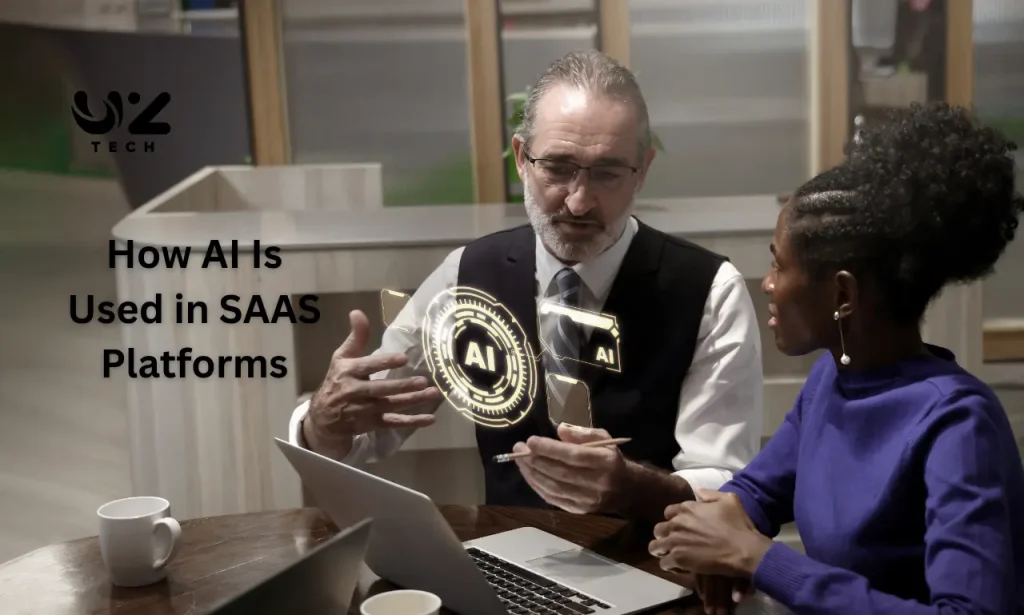
Artificial intelligence has become a core part of modern SaaS platforms. It helps software work smarter, faster, and more efficiently. Instead of relying only on manual rules, SaaS platforms now use AI to analyze data, automate tasks, and improve decision-making. This makes products more useful for both businesses and end users.
AI in SaaS is not limited to one function. It is used across product features, customer support, security, marketing, and analytics. As SaaS platforms grow and handle more users and data, AI helps manage this complexity. Below is a detailed explanation of how AI is used in SaaS platforms and why it matters.
Table of Contents
What AI Means in the Context of SaaS
In SaaS platforms, AI refers to systems that can learn from data and improve over time. These systems analyze patterns, predict outcomes, and automate actions without constant human input.
AI in SaaS often includes machine learning, natural language processing, and predictive analytics. These technologies allow platforms to adapt to user behavior and business needs. Instead of static software, SaaS becomes more dynamic and responsive.
This shift improves performance, accuracy, and user experience across the platform.
AI-Powered Automation in SaaS Platforms
Automation is one of the most common uses of AI in SaaS. AI-driven automation reduces manual work and speeds up daily operations.
Tasks like data entry, workflow approvals, and report generation can be automated. AI systems learn from previous actions and apply rules more accurately over time. This reduces human error and saves time.
Automation also helps SaaS teams scale operations. As the user base grows, AI handles repetitive tasks without needing extra resources.
How AI Improves Customer Support in SaaS
Customer support is a major area where AI adds value. SaaS platforms use AI to respond faster and solve issues efficiently.
AI Chatbots and Virtual Assistants
AI chatbots handle common questions and basic support requests. They are available 24/7 and provide instant responses.
These bots use natural language processing to understand user queries. Over time, they improve responses based on past interactions. This reduces support workload and improves response time.
Smart Ticket Routing
AI systems analyze incoming support tickets and assign them to the right team. This speeds up resolution and avoids delays.
Tickets are categorized based on urgency, topic, and user history. This ensures important issues get attention quickly.
Personalization Using AI in SaaS Platforms
Personalization helps SaaS platforms deliver better user experiences. AI analyzes user behavior and adapts the platform accordingly.
Users see relevant features, recommendations, and content based on their activity. This makes the platform easier to use and more engaging.
Personalization also helps reduce churn. When users feel the product fits their needs, they are more likely to stay long-term.
AI in Data Analytics and Insights
SaaS platforms generate large amounts of data. AI helps turn this data into useful insights.
AI-powered analytics tools identify trends, patterns, and anomalies. This helps businesses understand performance and user behavior better.
Instead of manual analysis, AI provides real-time insights. Businesses can make faster and more informed decisions using these insights.
Predictive Analytics in SaaS Platforms
Predictive analytics uses AI to forecast future outcomes. This is widely used in SaaS platforms for planning and optimization.
AI predicts user behavior, such as churn risk or upgrade potential. This allows proactive actions like targeted offers or support.
Predictive models also help with demand forecasting. SaaS platforms can prepare resources in advance during high-usage periods.
AI for Security and Fraud Detection
Security is a critical concern for SaaS platforms. AI plays a major role in protecting systems and user data.
AI monitors user activity and detects unusual behavior. This helps identify potential security threats early.
Instead of relying only on predefined rules, AI adapts to new threats. This makes security systems more effective and responsive.
AI in Sales and Marketing Automation
SaaS platforms often use AI to improve sales and marketing processes. AI analyzes customer data to optimize campaigns.
Marketing tools use AI to segment users and personalize messaging. This increases engagement and conversion rates.
Sales teams use AI to score leads and predict buying intent. This helps focus efforts on high-value prospects.
AI-Driven Product Recommendations
Product recommendations are another key use of AI in SaaS. These recommendations help users discover relevant features or upgrades.
AI analyzes usage patterns and suggests tools that match user needs. This improves product adoption and satisfaction.
For SaaS businesses, this also increases upsell and cross-sell opportunities.
AI in Workflow Optimization
SaaS platforms use AI to optimize workflows across teams. AI identifies bottlenecks and suggests improvements.
Workflows become faster and more efficient over time. Teams spend less time managing processes and more time on strategic tasks.
This is especially useful in enterprise SaaS platforms with complex operations.
Challenges of Using AI in SaaS Platforms
While AI brings many benefits, it also comes with challenges. AI systems require quality data to work effectively.
Poor data leads to poor results. SaaS platforms must invest in data management and monitoring.
There are also concerns about transparency. Users want to understand how AI-driven decisions are made. Balancing automation with user trust is important.
Choosing the Right AI Use Cases for SaaS
Not every feature needs AI. SaaS platforms should focus on areas where AI adds real value.
High-impact areas include support, analytics, security, and personalization. These areas benefit most from automation and prediction.
Starting small and scaling AI usage gradually helps reduce risks and costs.
Best Practices for Implementing AI in SaaS
Successful AI implementation requires planning. SaaS platforms should start with clear goals.
Data quality should be maintained consistently. AI models need regular updates and monitoring.
Teams should also ensure AI aligns with user needs. AI should simplify tasks, not complicate the experience.
FAQs
How is AI commonly used in SaaS platforms
AI is used for automation, customer support, data analytics, personalization, security, and predictive insights. It helps SaaS platforms work more efficiently and adapt to users.
Does AI replace human roles in SaaS businesses
AI supports human teams rather than replacing them. It handles repetitive tasks while humans focus on strategy, creativity, and complex decision-making.
Is AI in SaaS expensive to implement
Costs vary based on use cases and scale. Many SaaS platforms start with limited AI features and expand gradually as they see results.
How does AI improve user experience in SaaS platforms
AI personalizes features, speeds up support, and reduces friction in workflows. This makes the platform easier and more enjoyable to use.
Are AI-powered SaaS platforms secure
AI improves security by detecting threats and unusual activity. When combined with strong security practices, it makes SaaS platforms safer.
Conclusion
AI has become a key driver of innovation in SaaS platforms. It improves efficiency, personalization, and security while reducing manual workload. From customer support to analytics and automation, AI helps SaaS platforms deliver smarter solutions.
As competition grows, AI gives SaaS businesses a strong advantage. Platforms that use AI responsibly and strategically can scale faster and serve users better. With the right approach, AI transforms SaaS from simple software into an intelligent, adaptive system.